Most freelancers don’t struggle with earning money. They struggle with understanding where it goes.
There’s a particular kind of financial fog that settles in once freelance income becomes consistent — multiple clients, variable project fees, quarterly tax obligations, and a vague sense that the numbers aren’t quite adding up. Spreadsheets start to buckle. Bank statements become the default source of truth. And by the time tax season arrives, reconstructing a year of income and expenses from scratch has become an annual ritual nobody enjoys.
Financial reporting software is the structural fix for this problem. Not because it automates willpower, but because it turns raw transaction data into something legible — profit and loss statements, cash flow summaries, tax-ready records — without requiring an accounting background to make sense of it.
This guide covers what freelancers actually need from financial reporting tools, how to evaluate the real differences between options, and how to make a decision that holds up as income grows.
Why Financial Reporting Is a Different Problem for Freelancers
An employee receives a paycheck, pays taxes automatically, and has one income source to track. A freelancer manages irregular deposits from multiple clients, pays their own taxes quarterly, deducts business expenses, and operates as both the business and the accountant.
That structure creates reporting needs that personal finance tools were never designed to handle — and that basic bookkeeping alone doesn’t solve.
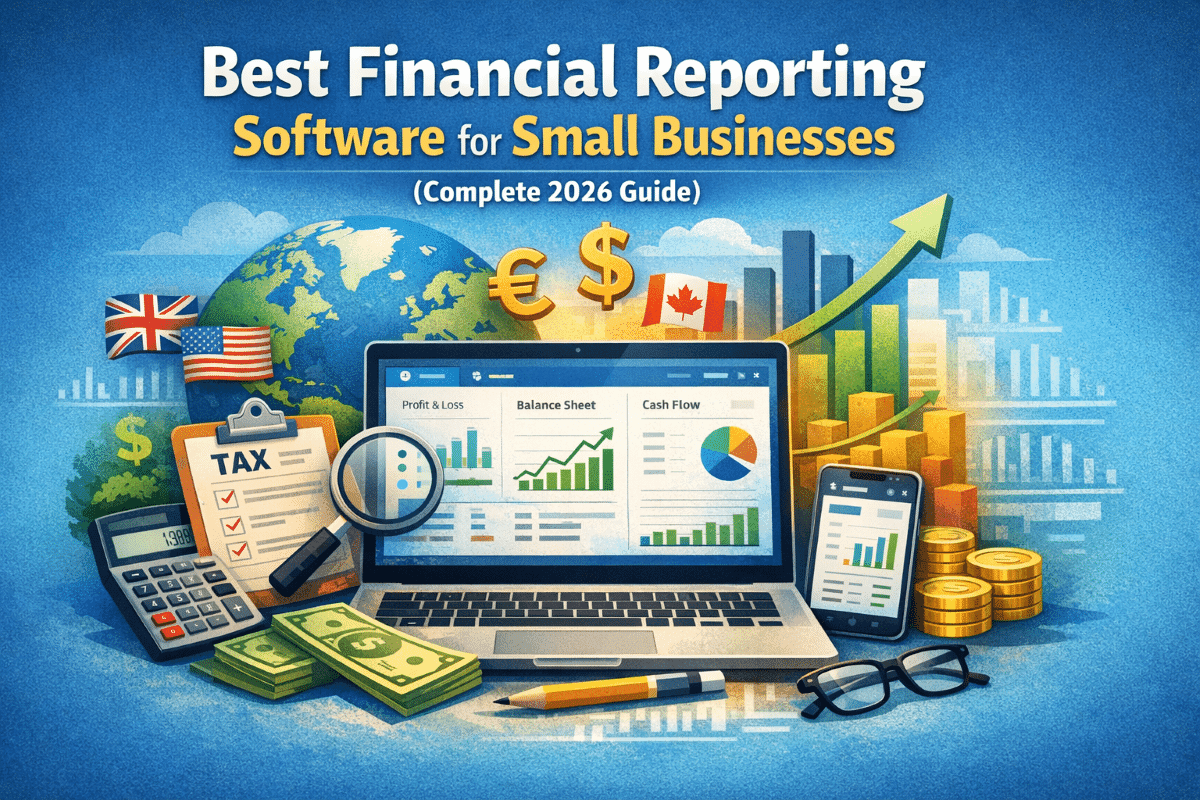
Knowing what you earned is not the same as knowing what you kept, what you owe in taxes, or whether your business is actually profitable after expenses. A profit and loss statement answers a different question than a cash flow summary. Both are different from a balance sheet view that shows assets, liabilities, and equity at a specific point in time.
Poor financial reporting leads to underestimated taxes, missed deductions, inaccurate pricing decisions, and weak financial documentation when applying for loans or leases as a self-employed professional.

What to Actually Look for in Financial Reporting Software
Profit and Loss Clarity
A profit and loss report (income statement) shows total revenue, total expenses, and net profit over a defined period. For freelancers, this is the most important report each month.
Look for software that automatically generates P&L reports from categorized transactions and allows filtering by client, date range, or expense category.
Cash Flow Visibility
Revenue and cash flow are not the same. You might invoice $6,000 and collect only $3,200 in a month. Strong reporting software tracks money movement timing — not just totals.
This matters for quarterly taxes, which are due on schedule regardless of when clients pay.
Tax Readiness and Expense Categorization
Freelancers typically owe 25–30% of net income in combined self-employment and income taxes. Proper expense categorization — software, equipment, office costs, education — directly lowers taxable income.
Good reporting tools organize data throughout the year so tax season becomes confirmation, not reconstruction.
CPA and Accountant Compatibility
Your software should generate reports and exports your accountant can use easily — typically CSV exports or direct compatibility with professional accounting systems.
A Real-World Scenario: Freelance Income Through the Reporting Lens
A freelance UX designer earns $7,500 in a month:
- $2,500 monthly retainer
- $3,000 project work
- $2,000 net-30 invoice (from last month)
Cash actually received this month: $5,500.
Revenue recorded: $7,500.
Monthly expenses:
- Software subscriptions: $180
- Co-working space: $250
- Professional development: $120
- Equipment depreciation: $80
Total expenses: $630.
Net profit: $6,870.
Estimated tax at 28%: $1,923.
Estimated take-home: $4,947.
Without structured reporting, this freelancer may base tax savings on $5,500 (cash received) rather than $6,870 (actual taxable profit), creating a monthly shortfall. Over a year, that gap compounds.
Choosing the Right Tool for Your Freelance Structure
QuickBooks Online
Comprehensive reporting: profit and loss, balance sheet, and cash flow statements. Strong CPA compatibility. Best suited for freelancers earning higher income or requiring detailed financial documentation.
FreshBooks
Balanced reporting with strong usability. Works well for freelancers who want clear profit reports without managing complex accounting workflows.
Zoho Books
Professional-grade double-entry accounting at competitive pricing. Strong alternative for freelancers wanting full reporting depth without premium pricing.
Wave
Free reporting suitable for early-stage freelancers. Generates basic profit and loss reports but offers limited customization and tax-depth tools.
Common Mistakes Freelancers Make with Financial Reporting
- Treating invoiced income as earned income. Revenue isn’t real until collected.
- Skipping expense categorization. Reports without organized categories are unreliable.
- Reviewing reports only during tax season. Monthly review improves decision-making.
- Choosing tools based only on invoicing features. Reporting depth matters separately.
- Not separating business banking. Mixing accounts weakens data accuracy.
Comparison: Financial Reporting Software for Freelancers
| Tool | Reporting Depth | CPA Compatibility | Expense Tracking | Pricing |
|---|---|---|---|---|
| QuickBooks Online | Comprehensive | Excellent | Full | Paid |
| FreshBooks | Solid | Good | Yes | Paid |
| Zoho Books | Professional | Good | Yes | Free + Paid |
| Wave | Basic | Limited | Yes | Free |
Frequently Asked Questions
What financial reporting software is best for self-employed freelancers?
QuickBooks Online and Zoho Books both provide professional-grade reporting. The right choice depends on budget and whether you collaborate regularly with a CPA.
Is QuickBooks worth it for a solo freelancer?
It becomes more valuable as income grows or complexity increases. For lower income levels, Zoho Books or FreshBooks may provide sufficient reporting.
Can freelancers use free accounting software?
Yes. Wave and Zoho Books’ free tier work for early-stage freelancers. Reporting limitations typically appear as income scales.
How does financial reporting software help with taxes?
It categorizes income and expenses year-round, generating profit and loss statements that align with tax forms and reduce year-end reconstruction work.
What’s the difference between invoicing and financial reporting software?
Invoicing software handles billing. Financial reporting software organizes all financial activity into structured reports. Some tools combine both.
The Practical Next Step
Getting serious about financial reporting usually follows a painful tax season or uncertainty about actual profitability.
Start by defining your needs: monthly profit and loss statements, automatic expense tracking, CPA-ready exports, and accurate cash flow visibility.
Choose based on income level and complexity — not popularity. The goal is clarity: knowing what you earned, what you kept, what you owe, and where the gaps are.
Financial clarity turns freelancing from unpredictable income events into a structured, sustainable business.